An engine control module (ECM) is the computer that runs a modern diesel engine. On a truck it decides how much fuel each cylinder gets, when it gets it, and how the engine protects itself when something goes wrong.
If you have ever wondered what an ECM on a truck actually does, this guide explains it in plain English: ECM vs ECU vs PCM, what the module reads and controls, the data it stores and what happens when an engine control module fails.
In this guide
What an engine control module is
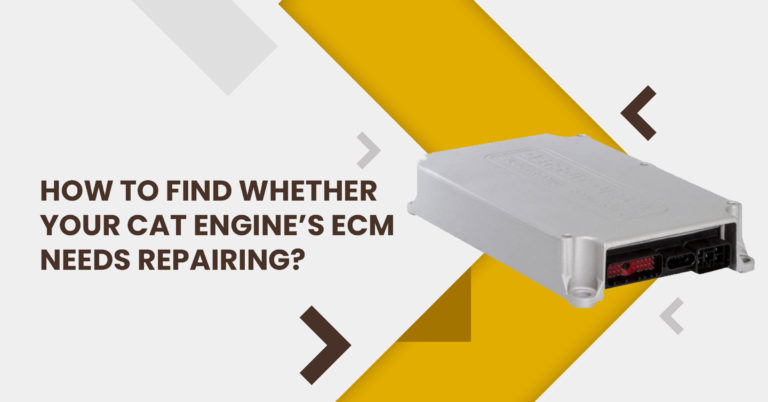
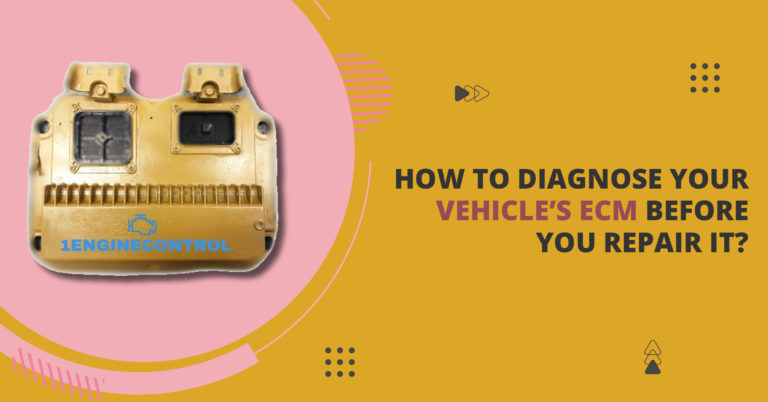
The ECM is a sealed metal box with a circuit board inside, usually bolted to the side of the engine block or mounted on the cab side of the firewall. It has one or more large connectors that link it to sensors, injectors and the rest of the truck.
Inside is a microprocessor, memory that stores the engine software and settings, and power circuits strong enough to fire the fuel injectors. Wikipedia’s article on the engine control unit gives a good general background.
ECM vs ECU vs PCM
These three names are often used for the same thing:
- ECM (engine control module): the usual term on heavy trucks from Caterpillar, Cummins, Detroit and International.
- ECU (engine control unit or electronic control unit): a common general term, especially in Europe and in car repair.
- PCM (powertrain control module): a module that controls both the engine and the transmission, common on pickups and cars.
So the difference is mostly in the name. On a heavy truck the ECM controls the engine, and other modules control the transmission, brakes and body functions.
What the engine control module reads
An ECM in a truck makes its decisions from a constant stream of inputs:
- Crankshaft and camshaft position sensors (engine speed and timing).
- Boost, oil, fuel and atmospheric pressure sensors.
- Coolant, oil, fuel and intake air temperature sensors.
- Accelerator pedal position.
- Vehicle speed, brake, clutch and cruise control switches.
- On newer engines, exhaust and aftertreatment sensors.
The module checks these signals many times every second and adjusts the engine to match.
What the engine control module controls
- Fuel quantity and timing: how much fuel each injector delivers and exactly when.
- Engine speed limits: idle speed, governed speed and road speed.
- Engine protection: derating or shutting down the engine on high temperature or low oil pressure.
- Turbo and emissions systems: on newer engines, the variable geometry turbo, EGR and aftertreatment.
- Engine brake and cruise control.
- Warning lamps on the dash.
Data your ECM stores
Besides running the engine, the ECM is a data recorder. It stores engine hours, fuel used, idle time, trip data, maximum speeds and fault codes with how often they occurred.
That information is valuable when you buy a used truck, plan maintenance or diagnose a problem. Our guide to buying a used semi truck explains how to use it.
What happens when an engine control module fails
Because the ECM controls fuel, a failure usually shows up as one of these:
- The engine cranks but will not start.
- Random stalling or cutting out.
- A dead cylinder or misfire.
- Low power or a derate with no clear cause.
- No communication with diagnostic tools.
Many of the same symptoms come from wiring, power or sensor faults, so diagnosis comes first. See our page on bad ECM symptoms and our guide to truck ECM diagnosis.
Why an ECM is not plug and play by default
Each unit carries software for a specific engine and rating, plus settings for the truck such as tire size, axle ratio and speed limits. A unit from another truck usually needs reprogramming before it runs your engine properly.
That is why repair of your original ECM is often simpler than replacement: the software and settings stay where they are. Read more in engine control module repair.
Frequently asked questions
What is an ECM on a truck?
It is the engine computer. It reads sensors, controls fuel and timing, protects the engine and stores trip data and fault codes.
Is ECM the same as ECU?
Yes, for most purposes. Both terms describe the engine’s control computer.
Where is the ECM located on a semi truck?
On most heavy-duty diesel engines it is bolted to the side of the engine block. Some trucks mount it in or near the cab.
How long does an engine control module last?
Many last the life of the truck. Heat, vibration, water and voltage spikes are what shorten their life.
Questions about your ECM?
Our Fort Worth, Texas team repairs, programs and replaces engine control modules for Caterpillar, Cummins and Detroit engines. Call 726-999-0231 or contact us.