Knowing the main parts of a semi truck makes it easier to talk to mechanics, understand repair bills and spot problems early. A Class 8 truck is a set of systems working together, and the engine computer ties more of them together every year.
This guide explains 10 essential semi truck components, the parts of a semi truck engine, the parts replaced most often and how the electronics connect it all.
In this guide
10 essential semi truck components
- Engine: usually a 13 to 15 liter inline-six diesel from Cummins, Detroit, Caterpillar (older trucks), Paccar or Volvo.
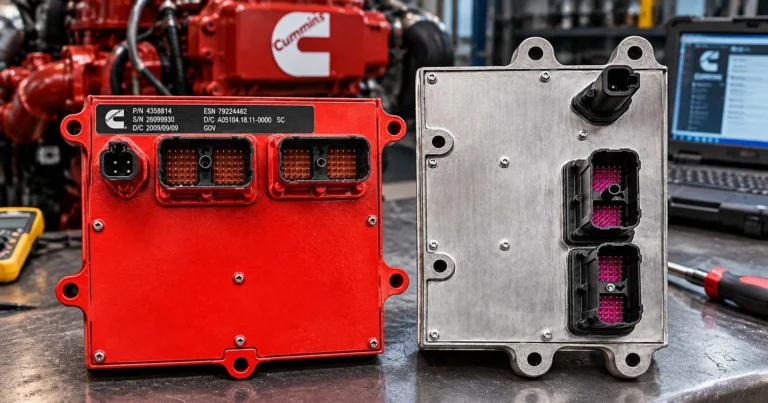
- Engine control module (ECM): the computer that runs the engine. See what an engine control module is.
- Fuel system: tanks, filters, lift pump, high-pressure pump and injectors.
- Turbocharger: uses exhaust energy to push more air into the engine; many have a VGT actuator.
- Aftertreatment: on newer trucks, the diesel particulate filter (DPF) and selective catalytic reduction (SCR) with DEF.
- Cooling system: radiator, fan, water pump and charge air cooler.
- Transmission and clutch: manual or automated manual, usually 10 to 18 speeds.
- Drive axles and suspension: tandem rear axles, air ride suspension.
- Air brake system: compressor, air tanks, brake chambers and valves.
- Electrical system: batteries, alternator, starter, wiring and modules.
Parts of a semi truck engine
- Block, crankshaft, pistons and cylinder head: the core mechanical engine.
- Injectors: deliver fuel to each cylinder under very high pressure.
- Turbo and VGT actuator: control boost. See our VGT actuator guide.
- EGR valve and cooler: recirculate some exhaust to reduce emissions on newer engines.
- Sensors: speed, timing, pressure and temperature sensors that feed the ECM.
- ECM: mounted on the engine block on most trucks.
- Engine brake: uses the engine to slow the truck.
Most often replaced parts
| Part | Why it is replaced |
|---|---|
| Filters (oil, fuel, air) | Routine maintenance |
| Brake linings and drums | Normal wear |
| Tires | Wear and damage |
| Batteries | Age and heavy cranking loads |
| Starters and alternators | Wear |
| Sensors | Heat and vibration |
| Injectors | Wear and fuel quality |
| VGT actuators | Heat and electronic wear |
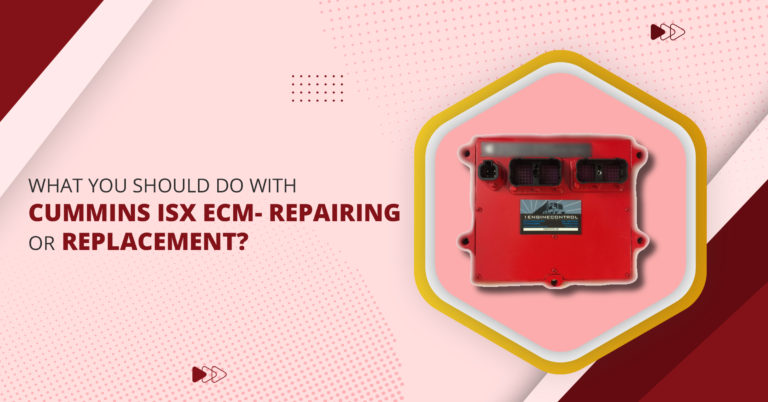
ECMs are replaced less often, and many failed units can be repaired. See diesel ECM repair.
How the electronics tie it together
Modern trucks have several computers: the engine ECM, transmission controller, brake (ABS) controller, body controller and dash. They share data over a network that follows the SAE J1939 standard, so the transmission knows engine speed and the dash shows engine warnings.
That is why one faulty module or a damaged network wire can cause problems that seem to come from somewhere else. Good diagnosis starts with the fault codes from every module.
Newer vs older trucks
Older trucks, built before the mid-2000s, have simpler emissions systems and fewer electronic modules. They are easier to work on but parts can be harder to find, especially electronic parts such as ECMs. Newer trucks add EGR, DPF and SCR systems, more sensors and more modules, which bring cleaner exhaust and better diagnostics but more parts that can fail.
Whatever the age, the engine computer sits at the center. Knowing your ECM part number and engine serial number makes every parts order faster.
Frequently asked questions
What are the main parts of a semi truck?
Engine, ECM, fuel system, turbo, aftertreatment, cooling, transmission, axles and suspension, air brakes and the electrical system.
What are the parts of a semi truck engine?
Block, crankshaft, pistons, head, injectors, turbo, EGR, sensors, the ECM and the engine brake.
Which semi truck components fail most?
Wear items like brakes, tires, filters and batteries, followed by starters, alternators, sensors and injectors.
Where is the ECM on a semi truck?
Usually bolted to the side of the engine block.
Questions about your truck’s electronics?
Call 726-999-0231 or contact us. We repair, program and replace ECMs for Caterpillar, Cummins and Detroit engines.